


Remember when SEO meant scattering keywords like confetti and hoping Google noticed your party. Google changed the rules of the game.
Now an AI bot reads your hard work, summarizes it in a neat, colored box, and steals your traffic before users can even click your link.
Welcome to the era of AI Overviews, where Google turns your website into its personal cheat sheet. If you want to survive this shift, you must learn to feed the algorithm exactly what it wants.
This blog guide unpacks the hard technical rules of AI search engines. We break down the exact content architecture, data structures, and trust metrics you need to survive.
Prepare to secure your brand presence in the age of algorithmic synthesis.
How Google AI Overviews Change SEO and What to Optimize?
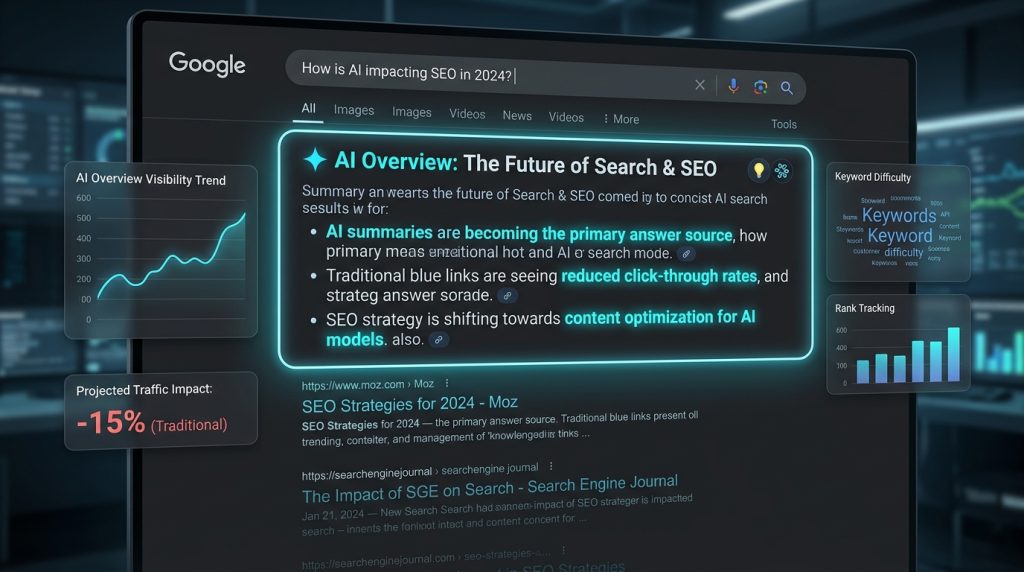
Google now bypasses traditional organic click-through rates by answering searchers directly on the results page. Large language models extract data points from multiple web surfaces to build these summaries.
This shift requires engineering your text for use with retrieval-augmented generation pipelines.
You no longer write just for human eyeballs. You write for scrapers that feed neural networks. To rank here, you must target informational nodes and entity connections rather than high-volume keywords.
Systems prioritize pages that provide instant clarity on complex issues.
Focus your efforts on deep topical authority and clear factual networks. Clear out fluff sentences and generic advice. The algorithm filters out weak filler text during vector embedding. Fix your information density now or accept total loss of search visibility.
You must learn how to adapt your digital assets. Focus on clear structures that machine learning models can parse without error.
We will show you how to structure data so algorithms favor your brand over competitors. This demands a complete overhaul of text structure.
Writing Content That Matches AI Overviews Intent Without Overstuffing
Algorithms quickly detect old-school keyword stuffing and penalize sites by ignoring them entirely. Modern search systems use semantic vectors to match user intent with content blocks.
You must write direct answers that resolve specific problems in the first two sentences of a paragraph. Use natural variations of your target phrases to build topical depth.
This strategy helps you optimize content for Google AI overviews without triggering spam filters. Keep your language simple and direct to improve your text’s readability.
Clear prose wins because machines parse simple sentences faster and with greater accuracy. Avoid long, winding sentences that confuse the semantic parser. Give the crawler concrete facts and immediate solutions. State the problem clearly, then provide the exact fix.
Scraping bots look for crisp definitions and structured answers to insert into the top summary box.
When you match the exact search intent, the model rewards your site with a source link. Pack each paragraph with unique data points that competitors fail to provide.
Structured Data and Entity Signals for AI Search Visibility

Search engines rely heavily on their underlying knowledge graphs to verify information across the web. You must feed these engines clear, machine-readable data through structured schema markup.
Apply explicit organization, product, and article schema to every page you publish.
This code establishes your content as a verified entity in the digital space. Clearly define the relationships between your brand, your authors, and your core topics.
Models look for these explicit entity signals to confirm the validity of your text. Connect your topics to known entities using verified database identifiers from sources like Wikidata. This method removes ambiguity for the web crawler.
When the algorithm understands exactly what your page represents, it extracts your data with high confidence. Do not leave entity recognition to guesswork or probability.
Write clear code blocks that outline your primary subjects and their attributes. This technical precision forms the foundation of modern search visibility.
It ensures that algorithms see your brand as an authority in your space. You gain a massive advantage over competitors who ignore code-based structure.
Building Answer Like Content with Clear Logic for AI Summaries
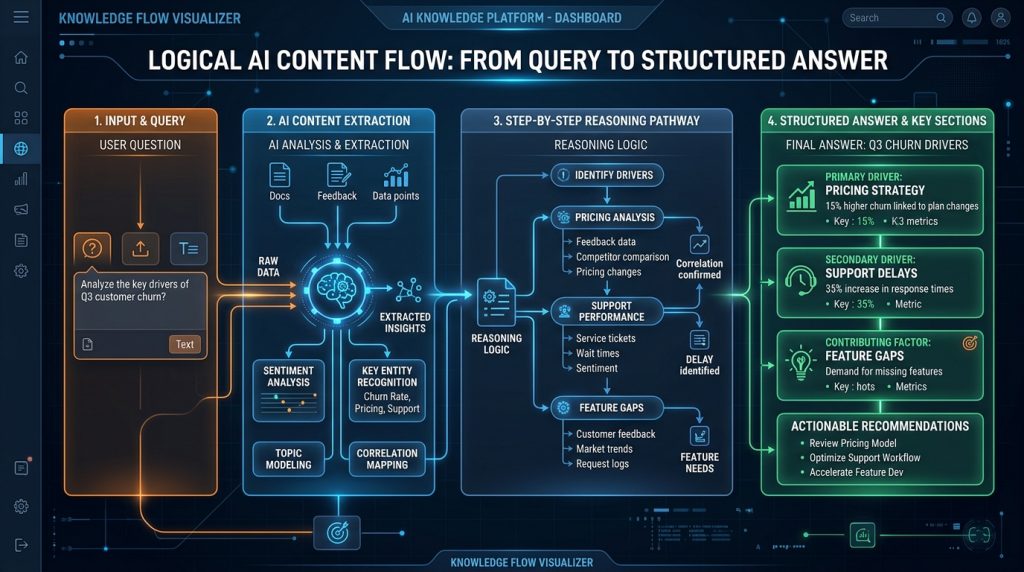
To earn a spot in the summary box, you must structure text like a direct answer key. Adopt the inverted pyramid writing style by placing your conclusion at the very top. State your main point immediately, then expand with supporting evidence.
Use clean bulleted lists to break down multi-step answers for the web crawler. Algorithms favor text that follows strict logical paths. For instance, state a cause and immediately show the direct effect. Use clear framing questions as subheadings to signal your topical focus.
A text block that answers who, what, or why directly will always outperform a vague essay. Keep your paragraphs short and limit each block to a single core idea.
This clear arrangement allows the model to grab your text and place it cleanly into user overviews. Do not hide your answers behind creative storytelling or slow introductions.
Give the machine the exact information it needs within seconds of scanning your page. This technical approach guarantees that your content remains highly scannable for both bots and humans.
Measuring and Improving AI Search Performance Beyond Traditional Rankings
Old tools that track traditional blue link rankings fail to capture your true visibility in generative search. You must shift your tracking metrics toward brand mentions and pixel share within the summary box.
Monitor your referral traffic from specific search engines to see how many users click through from AI summaries. Track your share of voice across core industry queries by manually auditing the generated overviews or using advanced API scrapers.
Watch for drops in standard organic traffic alongside increases in direct brand searches. This pattern often indicates that users see your name in the summary and search for you directly. Analyze which pages the model most frequently cites as sources.
If a page loses its citation link, update the text with fresher data points immediately. You must build custom tracking dashboards that monitor these emerging data channels.
Do not rely on outdated SEO metrics to judge your modern search performance.
Adopt a proactive measurement strategy to secure your digital footprint. Continuous monitoring allows you to adapt before traffic drops damage your bottom line.
Technical Content Patterns That Help AI Models Extract Reliable Answers
Neural networks read text using specific pattern recognition systems. You can guide these models by using strict subject-verb-object sentence structures.
Avoid passive phrasing and complex grammar that muddy your core message. Use clear HTML tables to present comparative data across multiple attributes. Tables give the crawler a clean grid of facts that it can instantly convert into an AI overview element.
Organize your technical specs using standard definition lists and clear heading hierarchies. When you write a definition, lead with the term followed immediately by its precise meaning.
This crisp formatting helps the parser extract facts without misinterpreting your context. Use exact numbers and units rather than vague descriptive adjectives.
Specify amounts, dates, and percentages clearly. Models prefer concrete metrics over subjective claims every time.
By establishing predictable text patterns across your site, you make your content the algorithm’s easiest choice.
You essentially eliminate the extraction friction that causes bots to skip your pages entirely.
Creating Trust Signals with Sources Citations and Verified Claims
Google protects its users by filtering out unverified claims from its automated summaries. You must back up every assertion on your site with hard data and primary source citations.
Link out to authoritative education or government domains to validate your technical points. Include clear author biographies that highlight real industry experience and professional credentials.
When you publish a statistic, cite the original study along with the publication year. This transparency signals deep trustworthiness to the evaluation algorithms. Avoid making generic statements that lack empirical support.
Introduce quotes from verified subject matter experts to reinforce your core arguments. The search system tracks these trust signals to separate authoritative content from low-quality AI-generated text.
Show your work by clearly explaining your research methodology in the text. When you build an undeniable network of trust, the model confidently highlights your brand as a reliable source.
Protect your reputation by maintaining the highest editorial standards across your entire domain. This rigorous verification process builds lasting authority that algorithms cannot ignore.
Avoiding Hallucination Risks When Your Content Is Summarized
When an AI model summarizes vague text, it often invents false facts or mixes up critical details. You can prevent these dangerous hallucinations by removing all ambiguity from your writing.
Never use vague pronouns like ‘it’ or ‘they’ when referring to technical components. Always state the exact name of the product or process you mean.
Keep modifying clauses close to the words they actually describe. This prevents the scraper from connecting a specific metric to the wrong subject.
Avoid using sarcastic language or complex metaphors that algorithms might interpret literally. State your guidelines in plain English to ensure absolute accuracy.
If you outline a multi-step process, specify the exact conditions required for each step. Do not leave room for the model to make logical leaps or dangerous assumptions.
Clear boundaries in your text force the summarizer to stick strictly to the facts on your page. You protect your brand and your readers by enforcing absolute clarity.
Treat your content like an engineering document, where every word has a single, clear meaning.
Optimizing for Mixed Queries Where Users Expect Both Explanation and Results
Mixed queries force search engines to serve content that satisfies both conceptual learning and direct action. You must design your pages with a dual layout that cleanly meets both requirements.
Start with a crisp conceptual definition that explains the core technology in simple terms. Follow this explanation immediately with an actionable data table or a list of specific products.
This balanced structure allows the model to pull the definition for the informational part of the overview while using your list for the results section. Label your sections using highly descriptive headings that indicate the exact nature of the text below them.
Do not merge your explanations and product details into a single messy paragraph. Keep them separate but logically linked. This separation helps the scraper categorize your information accurately during indexation.
By formatting your page to serve both intents, you capture a wider share of the AI overview box.
You satisfy the algorithm and the human user simultaneously. This approach positions your business as the ultimate resource for complex search terms.
A Practical Workflow for Optimizing Content for AI Overviews and AI Search
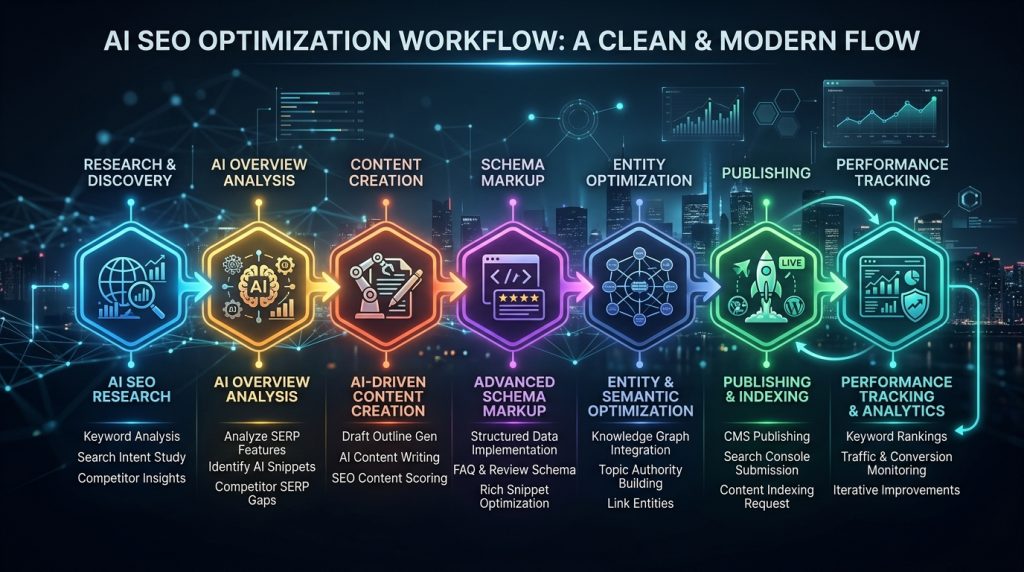
To achieve consistent visibility, you must embed a strict checklist into your publishing pipeline. First, scan the existing AI overview for your target term to map the current entity network.
Identify the primary questions the model highlights and the sources it currently cites. Next, draft your text using the direct subject-verb-object pattern to ensure clean extraction.
Incorporate your primary phrase to optimize content for Google AI overviews early in the body text.
Third, convert your complex comparative data into clean HTML tables without using hyphens or colons in the code.
Fourth, inject explicit schema markup to register your authors and brand assets directly in the knowledge graph.
Finally, audit your finished page using automated readability tools to ensure a high comprehension score. Run your text through a vector parser to verify that your informational density remains high.
Follow this exact technical workflow for every piece of content you produce to dominate the modern search ecosystem. This systematic discipline guarantees long-term traffic survival.
Frequently Asked Questions
You improve your web assets by adding a clear 50-word summary under each main subheading. Write direct answers that resolve specific problems in the first two sentences.
Use bulleted lists to break complex processes into steps for the web crawler. Clean out fluffy sentences because the retrieval algorithm filters out weak filler text during data extraction tasks.
This search feature synthesizes web information to answer user queries directly on the results page. Large language models extract data points from multiple domains to build these summaries.
The system identifies the most unique and verified text blocks using retrieval augmented generation pipelines. It presents these facts to users while providing small link cards back to the source pages.
You secure a featured spot by answering specific user questions immediately on your page. Clean HTML code allows search spiders to crawl your content without encountering formatting errors.
Apply an explicit organizational schema to your domain so the bot can connect your brand to trusted databases. Publish original industry statistics and expert analysis that competitors fail to provide on their sites.
The algorithm heavily favors structured facts over creative storytelling or slow introductory paragraphs. Step-by-step guides with clear, numbered instructions achieve high citation rates in these automated boxes.
Comparison tables outlining clear criteria rank frequently because they offer scannable data. Pages that already rank in the top ten organic results provide the foundational text for these generated answers perfectly.
Generative summaries reduce traditional organic click-through rates for standard informational searches. Users find answers immediately without visiting separate web properties.
This change forces creators to target brand mentions and citation slots rather than simple keyword rankings. You must measure your share of voice within the AI summary box to accurately gauge your current global digital visibility metrics.
You must eliminate introductory fluff so the spider can extract your core facts. Build a clear hierarchical text layout using logical heading structures from one to four. Update your older pages frequently with fresh metrics and verified data points.
Link your articles into tight topic clusters to demonstrate your comprehensive industry expertise to the active evaluation algorithms now.
Write short, reader-friendly sentences using a direct subject-verb-object pattern. Avoid vague pronouns like ‘it’ or ‘they’ when describing technical components or tools.
Use precise numbers and concrete metrics instead of subjective adjectives. State the exact name of the product or process to prevent the language model from generating false details during automated content synthesis tasks now.
Keywords still help because they signal topical relevance to the primary index. The search model maps these terms to wider concepts and entity networks within its knowledge graph.
You should incorporate your primary phrases naturally into titles and first paragraphs. Focus on long tail informational phrases that mimic the specific conversational questions your audience actually asks online today.
Domain authority and deep topical relevance strongly influence your selection odds. The model checks your site for clear signals of experience and trust before citing your claims.
Factual accuracy and high information density determine whether the bot extracts your passages. Technical performance matters as well since the crawler requires rapid access to fully indexable text blocks on every single day.
Traditional SEO targets individual positions in a notable list of blue links on a website. AI search aggregates content from diverse sources to present a single unified response.
This new system prioritizes clear informational gain and original research over basic backlink volume. Winning requires making your text the most authoritative answer key available on the public web for all users everywhere now.
Conclusion
AI search changes how users find your brand online today. You must restructure your web pages to feed the algorithm clean facts and direct answers immediately. Scraping bots reward clear prose and structured data markup.
American Design Agency helps you build digital assets that dominate these new automated summaries. Implement these strict technical standards now to secure your traffic fully.
American Design Agency helps businesses build AI-ready SEO strategies for the future of search.