


There was a time when building a website was simple. Businesses only had to think about desktop users. Most people browsed the internet from large computer screens sitting on office desks or in their homes.
Designers created fixed layouts, developers built websites for a single screen size, and everything seemed to work just fine and then the world changed.
The launch of smartphones transformed how people interacted with the internet. Suddenly, users were no longer browsing from a desk. They were searching for restaurants while walking down the street, comparing products during their commute, and reading articles from the comfort of their couch.
Today, a website visitor could arrive from a smartphone, tablet, laptop, desktop computer, smart TV, or even a foldable device. Every screen is different. Every user expects a smooth experience. Yet many business websites still operate as if it were 2010.
This growing gap between user expectations and website performance is exactly why responsive web design services have become essential for modern businesses.
A website is no longer just a digital brochure. It is often the first interaction someone has with your brand. If that experience feels frustrating, outdated, or difficult to navigate, visitors rarely give businesses a second chance.
In an online world where attention spans continue to shrink, every click matters.
What Responsive Web Design Really Means
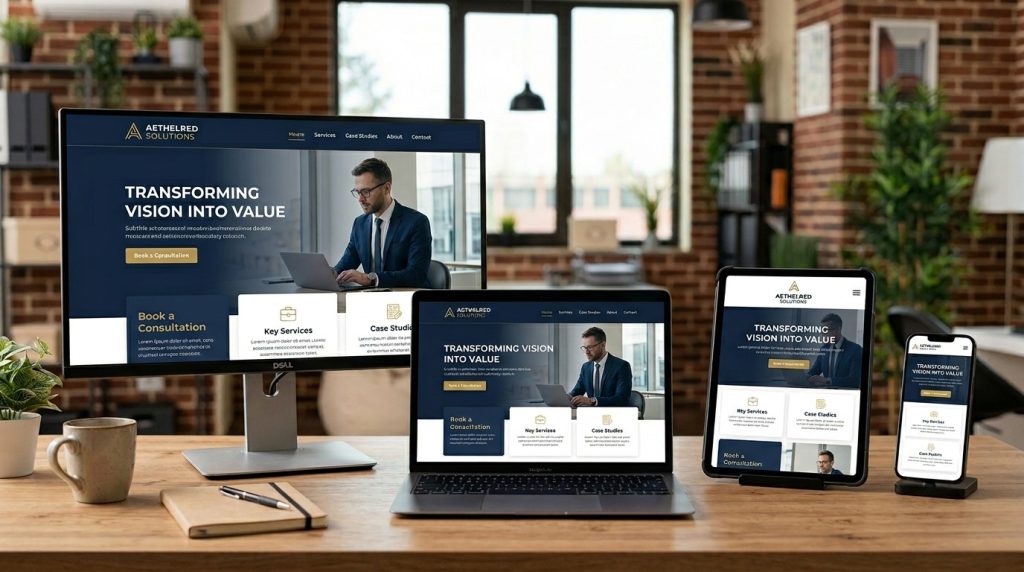
Many people hear the term responsive design and assume it simply means making a website look good on a phone, but the reality is much bigger.
Responsive design is the practice of creating websites that automatically adapt to different screen sizes, devices, and browsing environments. Instead of forcing users to zoom in, scroll sideways, or struggle with navigation, responsive websites adjust themselves to fit the user’s screen naturally.
Think about walking into a room where every piece of furniture automatically rearranges itself to make your movement easier. That is essentially what responsive design does for website visitors.
Professional responsive web design services focus on creating flexible layouts, scalable images, easy-to-read content, and seamless navigation that works across all devices.
The goal is not simply to make a website fit smaller screens. The goal is to create an experience that feels natural regardless of how someone chooses to browse.
When done correctly, users barely notice the technology behind it. They simply enjoy using the website.
Mobile Users Now Drive the Digital World
The numbers tell a story that businesses can no longer ignore. Mobile devices now account for the majority of web traffic worldwide. Millions of people begin their purchasing journey on a smartphone before ever touching a desktop computer.
Think about your own habits. How often do you search for a business, check reviews, compare prices, or browse products using your phone?
Most people do it every day. This shift has completely changed how websites should be designed. A desktop-first mindset no longer reflects how users behave online.
Visitors expect websites to load quickly, display properly, and provide easy navigation from the moment they arrive. They do not care about technical limitations or development challenges. They expect things to work.
Businesses that invest in responsive web design services are adapting to this reality. They understand that modern customers demand convenience, speed, and accessibility across every device.
Those that fail to adapt often discover an uncomfortable truth. Losing mobile visitors means losing opportunities.
The Hidden Cost of a Non-Responsive Website
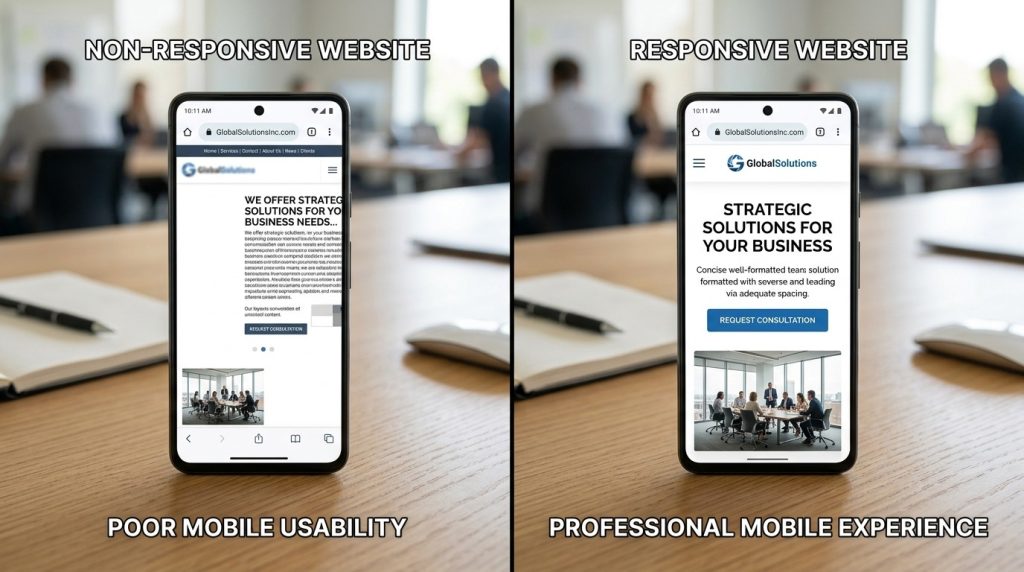
Many business owners judge their website from a desktop screen, often from the same device they use every day. On that screen, the website may appear acceptable. The layout may look clean, the images may seem properly placed, and the content may feel easy to read.
However, customers rarely experience a website in only one environment. They may visit it from a smartphone during a quick search, from a tablet at home, or from a smaller laptop screen while comparing service providers.
If the website fails to adjust properly across these devices, the business may lose valuable opportunities without realizing why.
A non-responsive website does not always create obvious problems at first. The damage often happens quietly through lower engagement, weaker trust, fewer inquiries, and reduced search visibility.
Visitors Leave Faster
Online users make decisions quickly. When a website feels difficult to use, they rarely take time to understand the problem. They simply leave and choose another option.
Small text, crowded layouts, broken menus, oversized images, and buttons that are hard to tap can immediately create frustration. These issues may seem minor from a business owner’s perspective, but for visitors, they create unnecessary effort.
Every lost visitor represents more than a missed page view. That person may have been ready to ask for a quote, book a service, make a purchase, or recommend the business to someone else.
When a website creates friction, it shortens the visitor’s journey before the business gets a real chance to communicate its value.
Trust Begins to Erode
A website often acts as the first impression of a business. Before a visitor speaks to the team, reads reviews, or compares pricing, they judge the business through its online experience.
If the website looks broken on mobile, loads poorly, or feels outdated, visitors may question the professionalism of the company behind it. This reaction may not always be fair, but it is common.
Professional responsive web design services help businesses create a consistent and reliable experience across devices. This consistency builds confidence because visitors feel they are dealing with a business that pays attention to quality, detail, and customer convenience.
Trust is not built through design alone, but poor design can weaken it very quickly.
Search Visibility Suffers
Search engines aim to recommend websites that provide useful, accessible, and user-friendly experiences. When a website performs poorly on mobile devices, it can send negative quality signals.
A non-responsive website may create issues such as difficult navigation, poor readability, slow engagement, and higher bounce rates. Over time, these problems can affect how well the website competes in search results.
This makes mobile performance more than a design concern. It becomes a visibility concern.
Even if a business offers strong services, poor responsive performance can make it harder for potential customers to discover the website organically. The result is often a gradual decline in traffic, inquiries, and online competitiveness.
Sure, Ali. Here is that section rewritten as smooth paragraph-style content:
User Experience Has Become a Competitive Advantage
Not long ago, having a website was enough to give a business an online advantage, but that is no longer the case. Almost every company has a digital presence, which means the real difference is not whether a website exists, but how well it serves the people who visit it.
This is where responsive web design services create real business value. A responsive website helps users move through pages with less effort.
It allows them to find information faster, understand services more clearly, and take action without frustration. When navigation feels simple and content is easy to read on any device, the entire experience becomes more effective.
These improvements may seem small on their own, but together they shape how visitors feel about a business. A user who enjoys the experience is more likely to stay longer, explore more pages, submit an inquiry, or complete a purchase.
In competitive industries, this level of convenience can become a deciding factor. The businesses that win online are not always the ones with the largest budgets.
They are often the ones that make the customer journey easier, faster, and more trustworthy from the first click.
Why Google Rewards Responsive Websites
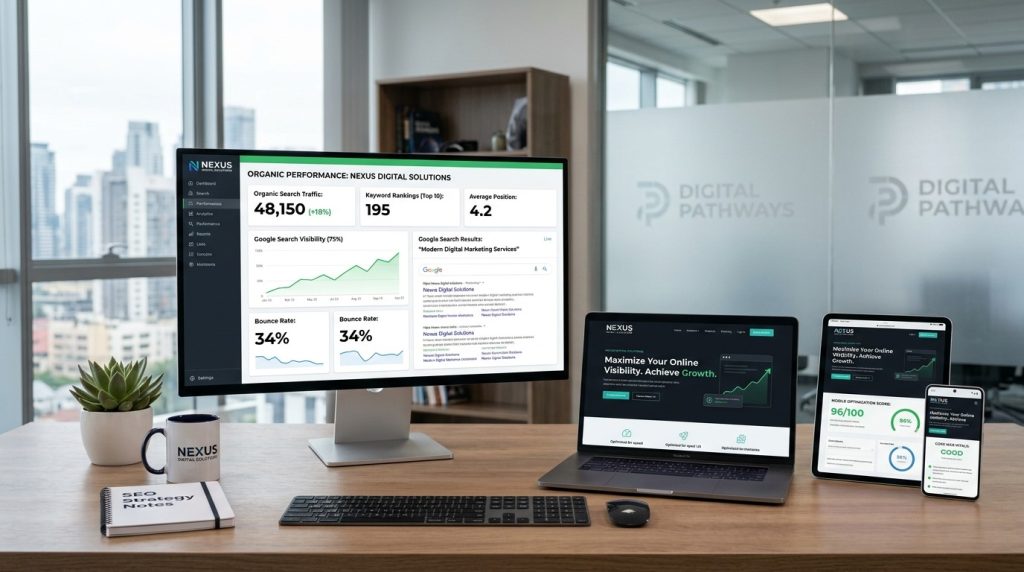
Responsive design is not only about user convenience. It also affects how search engines evaluate a website’s quality. Since Google focuses heavily on mobile experience, a website that works well across all devices has a stronger chance of performing better in search results.
A responsive website makes content easier to read, pages easier to navigate, and the overall structure easier for search engines to understand. This is why many businesses include responsive web design services in their SEO strategy.
A smooth experience across devices helps users stay engaged and makes the website easier to discover online.
Website Performance Matters More Than Ever
Patience is becoming increasingly rare online. People expect websites to load almost instantly. Even a delay of a few seconds can cause visitors to abandon a page before it fully appears.
Imagine clicking a website link while searching for a service. You wait. Nothing happens. You wait a little longer. Most people simply hit the back button.
A slow website creates frustration before visitors even have a chance to view your content.
Responsive websites are often built with performance in mind. Images can be optimized for different devices. Layouts can adapt without unnecessary elements slowing down the experience.
Professional responsive web design services help businesses create websites that feel fast and responsive regardless of screen size.
This improvement affects more than user satisfaction. Faster websites often experience lower bounce rates, longer session durations, and improved conversion rates. In simple terms, speed helps businesses keep visitors engaged.
Accessibility Is No Longer Optional
The internet should be easy for everyone to use. That includes people with different abilities, devices, and browsing preferences.
Modern websites must consider more than screen size alone. They must also support readable text, clear navigation, touch-friendly interactions, and compatibility with assistive technologies.
Responsive design naturally supports many of these goals.
When content adjusts properly to different screens, users can access information more comfortably. Buttons become easier to tap. Text becomes easier to read. Navigation becomes easier to understand.
Businesses that prioritize accessibility often discover an unexpected benefit. They create better experiences for everyone.
This is another area where responsive web design services deliver value. The goal is not simply to make websites flexible. The goal is to make them usable by the widest possible audience.
A website that welcomes more users creates more opportunities for growth.
The Future Will Bring New Devices
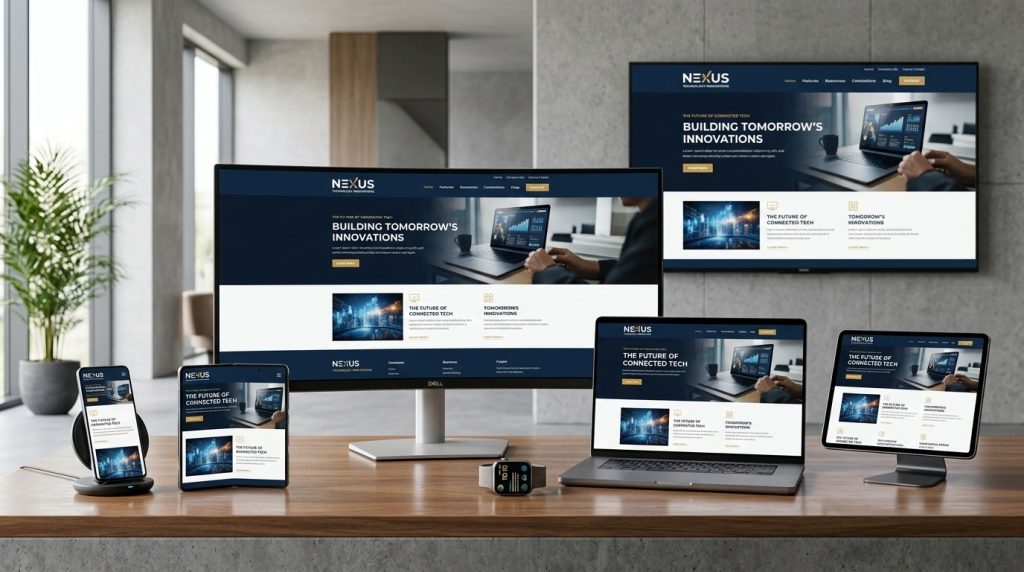
Technology never stands still. Just a few years ago, most businesses focused on desktops and smartphones. Today, users browse websites on tablets, smart TVs, foldable phones, and wearable devices.
Tomorrow will bring even more innovation. No one can predict every new device that will appear over the next decade. However, businesses can prepare for change by building flexible digital experiences today.
That is one of the greatest strengths of responsive design. Rather than designing for one specific screen, responsive websites are designed to adapt. As technology evolves, the website evolves with it.
Businesses that invest in responsive web design services are not simply solving today’s challenges. They are preparing for tomorrow’s opportunities.
This future-focused approach helps protect the value of their website investment for years to come.
Signs Your Website Needs Responsive Web Design Services Right Now
Sometimes the need for improvement is obvious. Other times, warning signs appear gradually.
Here are a few indicators that your website may already be falling behind.
- Visitors leave too quickly: If users exit within seconds, your website may be difficult to use or read on their device.
- Mobile traffic is growing, but conversions are low: More mobile visitors should create more leads. If that is not happening, the mobile experience may be creating friction.
- Your website feels outdated: A design that looked modern years ago may now feel old, slow, or less trustworthy.
- Competitors offer a smoother experience: If competing websites are easier to browse, visitors may choose them instead.
- Search visibility is declining: Poor mobile performance can affect rankings, reduce traffic, and limit new customer opportunities.
These signs often show that professional responsive web design services can improve usability, trust, and overall website performance.
Conclusion
The digital world has changed quickly, and users now expect websites to work smoothly on every device. Responsive design is no longer optional for businesses that want to stay competitive, build trust, and create a better online experience.
From stronger user experience to better search visibility, responsive web design services help businesses adapt to modern customer expectations. The websites that succeed tomorrow will be the ones that improve today, because visitors already expect a seamless experience wherever they browse.
Frequently Asked Questions
Responsive web design services focus on creating websites that automatically adjust to different screen sizes and devices. Using flexible layouts, scalable images, and adaptive design elements, a responsive website provides a consistent experience whether visitors access it from a smartphone, tablet, laptop, or desktop computer.
Modern users browse the internet from a wide range of devices and expect websites to work seamlessly on all of them. Responsive design helps businesses meet these expectations by improving usability, accessibility, and overall website performance across every screen size.
Responsive design makes websites easier to navigate, read, and interact with. Content automatically adapts to the user’s device, eliminating the need for excessive zooming, scrolling, or resizing. This creates a smoother experience that encourages visitors to stay engaged.
Responsive web design services help businesses improve user experience, strengthen brand credibility, increase mobile engagement, support SEO efforts, and simplify website management. They also help businesses reach a larger audience by ensuring accessibility across all devices.
Responsive websites provide a better experience for mobile users, making it easier for them to access content and interact with the site. This improved usability can reduce bounce rates, increase engagement, and encourage visitors to return, helping businesses maximize their mobile traffic potential.
Yes. Search engines prioritize websites that provide a strong mobile experience. A responsive website supports mobile usability, improves accessibility, and helps search engines crawl content more effectively, making it an important part of modern SEO strategies.
A mobile-friendly website may simply display correctly on smaller screens, while a responsive website automatically adapts its layout, images, and content to fit different screen sizes. Responsive design provides a more flexible and consistent experience across all devices.
Responsive websites remove barriers that can prevent users from taking action. When visitors can easily navigate pages, complete forms, and access information from any device, they are more likely to contact the business, request a quote, or complete a purchase.
A good responsive website should include flexible layouts, fast loading speeds, mobile-friendly navigation, readable content, optimized images, touch-friendly buttons, and consistent functionality across different devices and screen sizes.
Your website may need responsive web design services if mobile visitors leave quickly, pages are difficult to navigate on smaller screens, text is hard to read, conversions are declining, or the website appears inconsistent across different devices. These issues often indicate that the user experience needs improvement.
Let’s improve your website together
Your website should do more than just exist it should attract visitors, keep them engaged, and convert them into real customers. With professional responsive web design services, you get a fast, mobile-friendly, and user-focused website that works perfectly on every device.
A responsive website improves user experience, builds trust, and helps you get more leads by making it easy for visitors to take action without frustration or delays.
If you’re serious about growing your business online, now is the perfect time to upgrade your website and stay ahead of your competition.
