


Imagine walking into a library where every book has the same title. You would feel lost, right? A website can feel the same way when it tries to target every keyword on every page.
Many business owners ask, how many keywords should a website have to appear higher in search results? The answer is simple, your website does not need a magic number of keywords.
It needs the right keywords on the right pages, written for real people. When each page clearly answers a question or solves a problem, both visitors and search engines can understand its value.
Is There an Ideal Number of Keywords for a Website?
There is no perfect total number of keywords that works for every website. A small bakery website may only need pages about cakes, cupcakes, delivery, prices, and its local area.
A large online clothing store may need hundreds or even thousands of pages for shirts, shoes, sizes, brands, styles, and buying guides.
The size of your website matters, but usefulness matters even more. You should only target keywords that match what your business offers and what your audience truly searches for.
Adding random keywords just because they get searches will not help the right people find you.
So, when someone asks how many keywords should a website have, the best answer is this: as many useful keyword topics as the website can cover clearly and honestly.
Each important topic deserves a helpful page. Each page should make life easier for the person reading it.
The Difference Between Website Keywords and Page Keywords
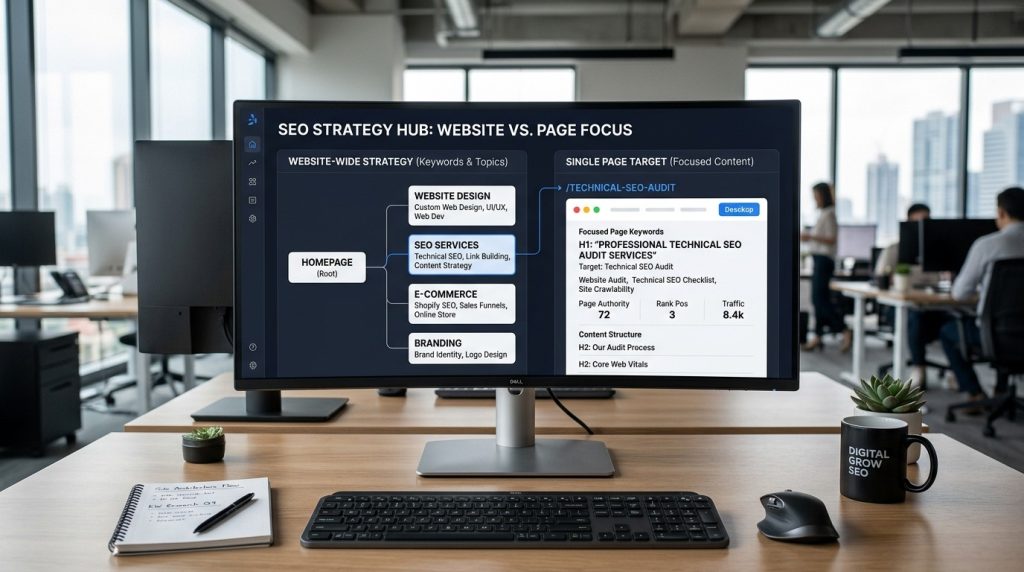
Website keywords are all the search terms connected to your whole website. For example, a web design company may want to appear for searches about website design, ecommerce stores, website maintenance, landing pages, and local web designers.
Page keywords are much more focused. One page may discuss ecommerce website design, while another covers website maintenance. This keeps each page clear and easy to understand.
Think of your website like a school bag. The whole bag can carry many books, but each book should cover one main subject.
If one math book suddenly tries to teach history, cooking, football, and music all at once, it becomes confusing. Your web pages work the same way.
How Many Keywords Should You Target Per Page?
A simple plan works best, where you choose one main keyword for each important page, then use a few related phrases that support the same topic. In many cases, one primary keyword and two to five close variations are enough to guide the content.
For example, a page about “web design services” may naturally discuss “custom web design,” “small business website design,” and “professional website design.” These phrases belong together because a visitor searching for any of them likely wants similar help.
You do not need to repeat every phrase again and again. Write naturally. Explain the topic well. Answer the questions a real visitor may have. Search engines are built to understand related wording, while readers simply want helpful answers.
Example of Keywords for a Single Page
Suppose you own a pet grooming business. You create a page about dog grooming. Your main keyword might be “dog grooming services.” Supporting phrases could include “professional dog grooming,” “dog bath and haircut,” and “pet grooming near me” if you serve a local area.
That one page can explain what your service includes, which dogs you help, how appointments work, how much time grooming usually takes, and why regular grooming matters.
It does not need to talk about cat boarding, pet food, dog training, and veterinary care unless those topics directly support the page.
This approach helps readers quickly find what they need. It also gives the page a strong, clear purpose.
Why Targeting Too Many Unrelated Keywords Hurts SEO
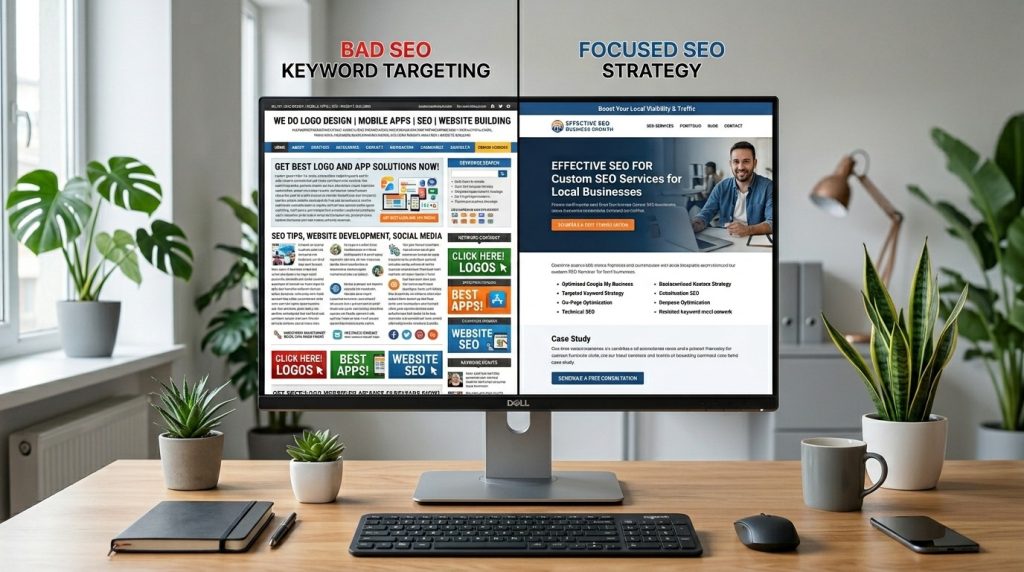
Trying to rank one page for too many different topics is like trying to have five conversations at the same time. Nobody knows where to focus.
A page about logo design should not suddenly spend half its space discussing app development or social media marketing just because those terms are popular. A visitor who clicked to learn about logos may leave because the page does not stay on topic.
A clear page usually performs better because it answers one need well. Google’s own SEO guidance encourages website owners to create useful content for people and make pages easy to understand, rather than trying to impress search systems with forced tricks.
Why More Keywords Do Not Automatically Mean Better Rankings
It can feel tempting to add a keyword everywhere that is in the title, every heading, every paragraph, image text, button, and footer. But more is not always better.
Search rankings are not a counting game. A page needs to be useful, clear, organized, trustworthy, and easy to navigate.
A visitor should finish reading and feel that their question has been answered. If the page sounds strange because the same phrase is repeated too many times, people may leave.
Good content often ranks for many related searches without trying to force each one into the text.
A helpful guide about choosing a family car may naturally appear for searches about safe cars, affordable family cars, or cars with large storage space because the topic is covered well.
Keyword Stuffing vs. Natural Keyword Optimization

Keyword stuffing happens when a page repeats keywords in an unnatural way to try to gain rankings. It sounds awkward and can make visitors lose trust.
For example, imagine reading: “Our cheap birthday cakes are the best cheap birthday cakes for people wanting cheap birthday cakes.” That sentence does not help anyone. It only sounds forced.
Natural optimization feels different. It might say: “Choose from fresh birthday cakes made for children, adults, and special celebrations. We offer custom designs and local delivery.” The message is clear, pleasant, and useful.
Google identifies keyword stuffing as a spam practice when keywords are added unnaturally or out of context to manipulate rankings.
How to Decide How Many Keywords Your Website Needs
The smartest keyword strategy begins with your customer, not with a giant spreadsheet.
Ask yourself:
- What does my audience need?
- What pages would genuinely help them?
Step 1: List Your Core Products, Services, or Topics
Start with the main things you offer. A digital agency might provide website design, online store development, SEO, logo design, and app development. Each main service can have its own page because each one solves a different problem.
A dentist may create pages for teeth cleaning, braces, emergency dental care, teeth whitening, and children’s dentistry. A bakery may need pages for birthday cakes, wedding cakes, custom cupcakes, delivery, and pricing.
Do not create pages only because a keyword exists. Create them when you have something real and useful to say.
Step 2: Identify Search Intent for Each Keyword
Search intent means the reason behind a search. Someone typing “what is website design” wants to learn. Someone typing “website designer near me” may be ready to hire. Someone searching “website design prices” wants to compare costs.
These people should not always land on the same page. A blog post can answer learning questions. A service page can explain what you offer. A contact or quote page can help ready-to-buy visitors take action.
When your page matches the visitor’s goal, they are more likely to stay, read, trust you, and contact you.
Step 3: Group Related Keywords Into Topic Clusters
A keyword cluster is simply a group of phrases that mean nearly the same thing or answer the same need. For example, “home cleaning services,” “professional house cleaning,” and “house cleaners near me” may work together on one service page.
However, “how to clean a carpet stain” has a different purpose. It may work better as a helpful blog post that leads readers to your cleaning service.
Grouping similar keywords helps you avoid creating many weak pages that repeat the same idea in slightly different words.
Step 4: Match One Keyword Cluster to One Useful Page
Every important page should have a job. Your homepage introduces your business. Your service pages explain your offers. Your product pages help customers shop. Your blog posts answer questions and build trust.
This is the real answer behind how many keywords should a website have is that you do not chase a number. Build a clear map where each keyword group leads to one strong, useful page.
Recommended Keyword Strategy by Website Type
Different websites need different keyword plans because they serve different visitors.
Small Business Website
A small business website should focus first on its main services and locations. A plumber may need pages about blocked drains, leaking pipes, boiler repairs, emergency plumbing, and the towns they genuinely serve.
The homepage should clearly introduce the business. Individual service pages should explain each service. Helpful blog posts can answer common questions, such as what to do before a plumber arrives or how to spot a water leak.
This gives the website a strong base without filling it with unnecessary pages.
Ecommerce Website
An online shop usually needs more keyword groups because it has more products. Category pages can target broad searches such as “men’s running shoes” or “wooden dining tables.” Product pages can focus on exact products, sizes, materials, or features.
Buying guides are also useful. A guide about choosing running shoes for beginners can help shoppers who are not yet sure what to buy. It supports the store without turning product pages into long, confusing articles.
Blog or Content Website
A blog works best when it builds around clear subjects. A gardening blog might have a main guide about growing tomatoes, followed by articles on tomato soil, watering, plant diseases, and harvesting.
These articles support one another instead of fighting to rank for the same exact idea. Readers can easily explore more helpful content, and the website grows into a trusted resource.
Where Should Keywords Be Used on a Web Page?
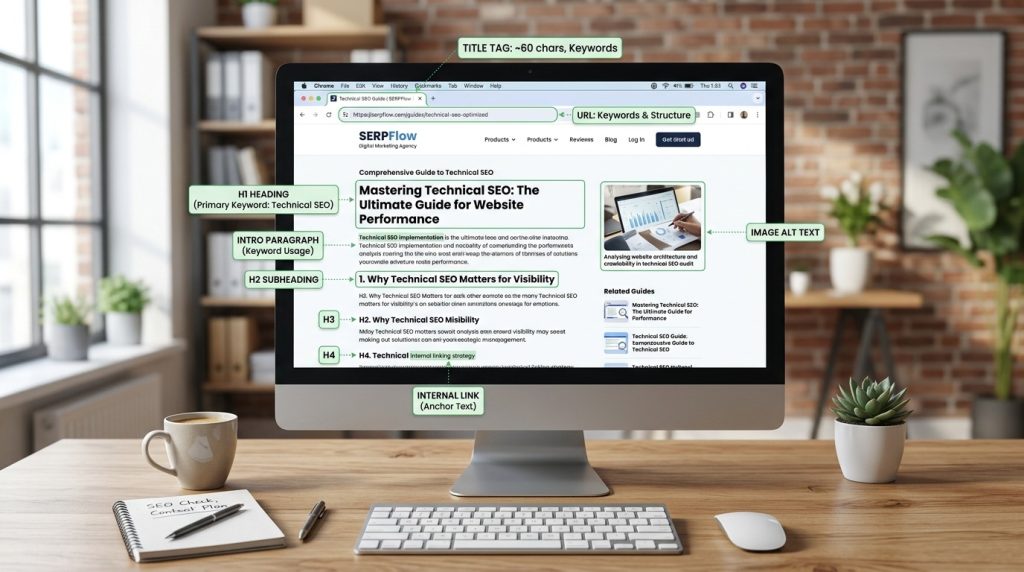
Keywords help search engines and readers understand what a page is about. Place your main keyword naturally in important areas, such as the page title, main heading, web address, opening section, and any suitable subheadings.
Your supporting phrases can appear where they make sense in the explanation. You can also use clear wording in internal links when linking from one useful page to another.
But never force a phrase into a sentence where it feels uncomfortable. A title should sound inviting. A heading should help readers scan the page. An image description should describe the image, not become a place to hide extra keywords.
Important Places to Include Your Primary Keyword
Your main topic should be obvious soon after a visitor arrives. A person should not have to scroll through several paragraphs before understanding what the page offers.
For a page about garden landscaping, the title and first paragraph can quickly state that the business provides garden landscaping services. Later sections can explain designs, planting, paving, prices, and the booking process.
Clear writing helps both people and search engines understand your content.
Use Secondary Keywords Naturally Throughout the Content
Secondary keywords are useful when they add meaning. They should feel like part of a normal conversation.
For example, a page about children’s party entertainment may naturally mention birthday entertainers, party games, balloon artists, or face painting. These words help describe the service in detail.
Your goal is not to tick off keyword boxes. Your goal is to create a page that answers the reader’s next question before they need to ask it.
Common Keyword Mistakes That Can Limit SEO Performance
One common mistake is trying to make one page rank for every service a business offers. This creates messy content and makes it difficult for readers to find the information they actually need.
Another mistake is creating several pages that all say almost the same thing. For example, pages for “affordable web design,” “cheap web design,” and “budget website design” may compete with each other if they target the same audience and offer the same answer.
Some website owners also chase popular keywords without checking whether those searches match their service. Thousands of visits are not helpful when visitors have no reason to buy, book, subscribe, or contact you.
Finally, do not ignore longer, more specific searches. A phrase such as “birthday cake delivery for children’s parties” may receive fewer searches than “cakes,” but it can bring visitors who know exactly what they want.
How to Measure Whether Your Keyword Strategy Is Working
A good keyword plan should lead to real signs of progress. Use Google Search Console to see which searches show your pages, which pages receive clicks, and which topics are starting to gain attention.
Google’s Performance report is designed to show search queries, clicks, impressions, and page performance.
Look beyond traffic alone. Ask whether visitors contact you, buy products, read more pages, or complete the action you want them to take.
Signs Your Keyword Strategy Needs Improvement
Your strategy may need work when a page appears in search results but few people click it. The page title may not clearly promise the answer they want.
You may also need changes if several pages appear for the same search but none performs strongly. Those pages may need to be combined or given clearer purposes.
Most importantly, pay attention when visitors arrive but do not act. Good keyword choices should bring the right people, not just more people.
Conclusion
There is no magic keyword total that guarantees strong rankings. A small site may target a few dozen valuable searches, while a large shop or publishing site may cover thousands.
The better question is: does every important page help a real visitor with one clear need? Give each page one main topic, support it with closely related phrases, and write in a natural voice that people enjoy reading.
When you stop stuffing pages with words and start building helpful content around real questions, SEO becomes much easier to understand. That is the smartest way to answer how many keywords a website should have for better results.
Frequently Asked Questions
There is no fixed number. Target keywords that match your services, products, and audience needs. Small websites may target dozens, while larger websites may target hundreds or thousands across useful, focused pages.
Focus on one primary keyword per page, supported by two to five closely related phrases. This keeps the page clear, natural, and helpful for people searching for that topic.
Yes. Use multiple keywords when they relate to the same topic and user intent. Avoid combining unrelated keywords, as this can confuse readers and weaken the page’s focus.
There is no set limit. Keywords become too many when they are irrelevant, forced into content, or lead to unnecessary pages that offer little value to visitors.
Overusing keywords can make content difficult to read and less trustworthy. When phrases are repeated unnaturally to influence rankings, it may be considered keyword stuffing and harm SEO performance.
Choose keywords based on your services, products, locations, and customer questions. Group related terms together, then create helpful pages that clearly match what users are searching for.
Each important page should target a clear topic, not necessarily a completely different keyword. Closely related keywords can belong on one page when they serve the same search intent.
Create helpful pages around clear topics. Use one main keyword, add related terms naturally, answer user questions clearly, and organize your website so visitors can easily find what they need.
A small business should target keywords for its main services, genuine locations, and common customer questions. The total depends on how many useful pages the business can create and support.
No ideal keyword density guarantees rankings. Use keywords naturally in useful places, such as headings and page content, while focusing on clarity, relevance, and helpful answers for visitors.
Ready to Grow Your Rankings with the Best Digital Marketing Agency?
SEO success doesn’t come from guessing keywords it comes from a clear strategy, strong content structure, and pages built around real search intent. If you want to improve visibility, attract the right audience, and turn traffic into real business growth, you need a smarter SEO approach.
Partner with the best digital marketing agency to build powerful keyword strategies, optimize your website for better rankings, and create content that actually drives results.
Book your free project consultation call!
