


Launching an online store sounds easy, but getting people to find it on Google is the hard part. Every day, thousands of ecommerce businesses compete for the same customers.
If your store does not appear on the first page of search results, you’re giving your competitors free opportunities to make sales.
That is where a solid ecommerce SEO checklist makes a real difference. Instead of guessing what works, you can follow proven strategies that help search engines understand your website and show it to people who are ready to buy.
SEO is not about tricking Google. It is about building a fast, helpful, and easy-to-use store that answers customers’ questions better than anyone else.
Whether you sell clothing, electronics, furniture, beauty products, or handmade items, improving your SEO can lead to more traffic, better visibility, and higher sales without paying for every click.
In this blog post, you’ll learn 25 practical steps that can strengthen your rankings and help your online store grow.
Why Ecommerce SEO Is Important
Many online stores rely heavily on paid advertising. While ads can bring quick traffic, they also stop working the moment you stop spending money. SEO is different because it helps your store attract visitors naturally over time.
When someone searches for a product on Google, they already have buying intent. Showing up in those search results gives you the chance to earn a customer before they even look at your competitors.
A strong ecommerce SEO checklist also improves much more than rankings. It helps you build trust with shoppers, create a better shopping experience, increase page speed, and organize your website in a way that makes buying easier.
The higher your store ranks, the more people discover your products. More qualified visitors usually mean more conversions and long-term growth.
Before You Start Your Ecommerce SEO Checklist

Before making changes to your website, spend some time understanding where your store stands today. Jumping into SEO without a plan often leads to wasted effort.
Start by defining your goals clearly and maybe you want more organic traffic, higher product page rankings, or increased online sales. Clear goals help you measure progress later.
Next, understand your target audience. Think about what your customers search for, the words they use, and the problems they want to solve.
Perform a basic SEO audit of your store’s website, check for broken pages, duplicate content, missing titles, and indexing issues, and slow loading speeds. Knowing your starting point makes it much easier to prioritize improvements.
25 Proven Ecommerce SEO Checklist Steps to Boost Rankings
A successful ecommerce SEO checklist is not about one big change. It is about making many smart improvements that work together.
Keyword Research and Planning
1. Find Buyer-Intent Keywords
Focus on keywords that show people are ready to purchase. Someone searching for “buy wireless gaming mouse” is much closer to buying than someone searching for “best computer accessories.”
2. Target Long-Tail Keywords
Long tail keywords are longer and more specific phrases. They usually have less competition and attract visitors who know exactly what they want.
3. Analyze Competitor Keywords
Study websites that rank higher than yours. Look at the keywords they target and identify opportunities they may have missed.
4. Map Keywords to the Right Pages
Avoid using the same keyword across multiple pages. Give each important page its own primary keyword to prevent competing with yourself.
Category and Product Page Optimization

5. Optimize Category Page Titles
Your category titles should clearly describe what customers will find while naturally including important search terms.
6. Write Unique Product Titles
Generic titles rarely perform well. Instead of simply writing “Running Shoes,” describe the product more specifically so both shoppers and search engines understand it.
7. Create Compelling Meta Descriptions
A good meta description encourages users to click your page in search results. Keep it clear, relevant, and focused on customer benefits.
8. Optimize Product Descriptions
Never copy manufacturer descriptions. Write original content that explains features, benefits, and real-life uses in simple language.
9. Use SEO-Friendly URLs
Keep URLs short and descriptive.
For example:
- Good: yourstore.com/mens-running-shoes
- Poor: yourstore.com/product?id=72819
10. Add Internal Links Between Related Products
Link similar products together so shoppers can easily continue browsing. Internal links also help search engines discover more pages.
Technical Ecommerce SEO

11. Improve Website Speed
Nobody likes waiting for slow websites. Even a few extra seconds can cause visitors to leave before viewing your products.
Compress images, reduce unnecessary code, and choose reliable hosting to improve loading times.
12. Make Your Store Mobile-Friendly
Most online shoppers browse using smartphones. Your website should look great and work smoothly on every screen size.
13. Fix Broken Links
Broken links create frustration for visitors and send negative quality signals to search engines. Regularly check your website and repair or remove broken pages.
14. Use HTTPS Across Your Website
Customers expect secure websites when entering payment details. HTTPS protects user data while also supporting better search visibility.
15. Optimize Crawlability and Indexing
Search engines need to find and understand your pages. Make sure important pages are accessible while blocking pages that do not belong in search results.
16. Submit an XML Sitemap
An XML sitemap gives search engines a roadmap of your website, making it easier for them to discover new and updated pages.
17. Fix Duplicate Content Issues
Duplicate content can confuse search engines. Create unique product descriptions and use canonical tags where necessary to show which version should rank.
Image and User Experience Optimization
18. Compress Product Images
Large image files slow your website down. Compress images without noticeably reducing quality.
19. Add Descriptive Image Alt Text
Alt text helps search engines understand your images while improving accessibility for users who rely on screen readers.
20. Improve Navigation and Site Structure
Visitors should reach any product in just a few clicks. Clear categories and simple menus make shopping much easier.
21. Simplify the Checkout Experience
A complicated checkout process leads to abandoned carts. Remove unnecessary steps and make buying as quick as possible.
Content and Authority Building
22. Publish Helpful Blog Content
Useful articles answer customer questions and attract new visitors through search engines. Educational content also builds trust before people make a purchase.
23. Encourage Customer Reviews
Reviews add fresh content to product pages while giving future buyers confidence in your products.
24. Build High-Quality Backlinks
When trusted websites link to your store, search engines view your site as more credible. Focus on earning quality backlinks instead of chasing large numbers.
25. Monitor SEO Performance and Keep Improving
Use your data to see what works, update underperforming pages, and continue improving your website over time.
Following this ecommerce SEO checklist consistently creates steady improvements that can compound into significant growth.
Common Ecommerce SEO Mistakes to Avoid
Most of the online stores struggle because they repeat the same avoidable mistakes.
One of the biggest problems is using duplicate product descriptions copied directly from manufacturers. Search engines want original content that offers value.
Another common mistake is stuffing keywords into every sentence. Instead of helping rankings, this often makes pages difficult to read.
Ignoring technical SEO is equally damaging. Slow websites, broken links, and indexing problems prevent even great content from performing well.
Many store owners also forget about internal linking. Products become isolated, making them harder for both users and search engines to find.
Thin category pages with only product listings also miss valuable ranking opportunities. Adding useful introductory content gives search engines more context while helping shoppers understand what they are browsing.
Avoiding these mistakes will make your ecommerce SEO checklist much more effective.
Essential Ecommerce SEO Tools
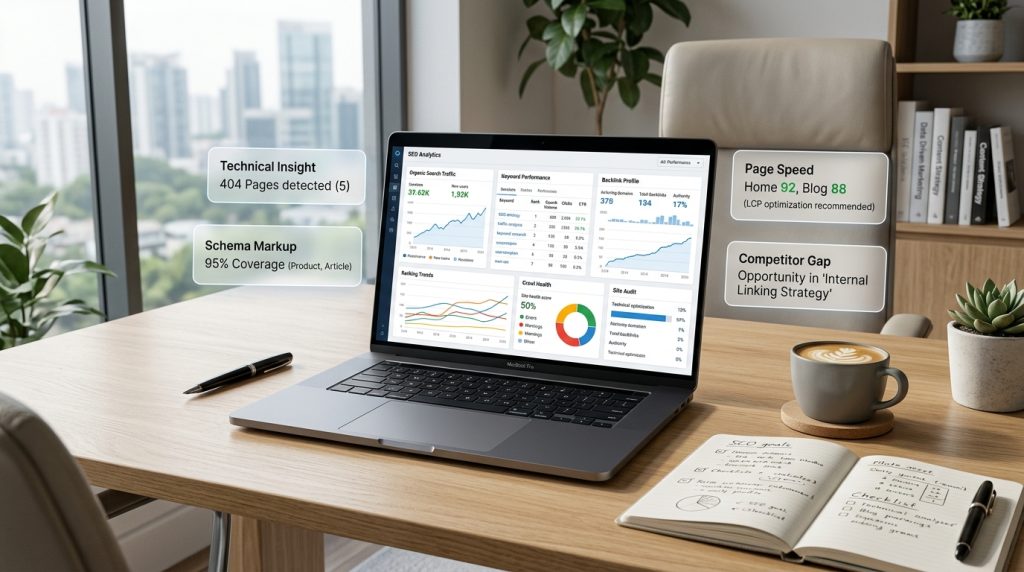
You do not need dozens of expensive tools to improve SEO. A handful of reliable platforms can provide everything you need.
Google Search Console helps you monitor search performance, identify indexing problems, and track keyword visibility.
Google Analytics tells you where your visitors are actually coming from, which pages perform best, and how customers move through your website.
Ahrefs and Semrush are excellent for keyword research, competitor analysis, backlink tracking, and content planning.
Screaming Frog crawls your website to find the technical issues such as broken links, duplicate titles, redirect chains, and missing metadata.
Google Page Speed Insights analyzes your website’s performance and recommends improvements that can make your store faster.
These tools make your ecommerce SEO checklist easier to manage because they show exactly where improvements are needed.
How Long Does Ecommerce SEO Take to Show Results?
One of the biggest misconceptions about SEO is that results happen overnight. They rarely do.
For newer ecommerce websites, noticeable improvements often take several months. Established websites with strong authority may see changes sooner after making meaningful updates.
Several factors affect your timeline, including competition, website quality, backlink profile, content strength, and technical health.
The important thing is consistency. Every optimized page, improved product description, faster loading time, and quality backlink builds momentum over time.
Think of SEO like building a reputation. The more value your website provides, the more trust it earns from both search engines and customers.
If you stay committed to your ecommerce SEO checklist, the long-term rewards usually far outweigh the effort.
Conclusion
Winning at ecommerce is not about luck rather, it is about building a website that deserves to rank above the competition.
The businesses that dominate search results are not always the biggest. They are often the ones that consistently improve their stores, create better content, fix technical issues, and focus on helping customers every step of the way.
Treat this ecommerce SEO checklist as an ongoing strategy for your business, instead of a one time project. Review it regularly, update your pages, monitor your performance, and continue making improvements. Small changes made consistently can produce massive results over time.
Start implementing these proven steps today, stay consistent, and let your competitors wonder how your store keeps climbing the search results.
Frequently Asked Questions
An ecommerce SEO checklist is a step-by-step guide that helps you optimize your online store for search engines like Google. It includes tasks such as keyword research, product page optimization, improving website speed, and fixing technical issues. Following a checklist ensures you don’t miss important SEO practices, helping your store rank higher, attract more qualified visitors, and increase sales over time.
You can improve your ecommerce website rankings by targeting the right keywords, creating unique product descriptions, optimizing category pages, improving site speed, making your website mobile-friendly, building quality backlinks, and regularly updating your content. Consistently following SEO best practices helps search engines understand your website and rank it for relevant searches.
Some of the most important SEO steps include performing keyword research, optimizing product and category pages, creating SEO-friendly URLs, improving page speed, fixing broken links, adding internal links, optimizing images, using HTTPS, and monitoring your website’s performance with tools like Google Search Console and Google Analytics.
Start by writing unique product titles and descriptions that naturally include your target keywords. Use high-quality images with descriptive alt text, create short and readable URLs, add customer reviews, and include internal links to related products. A well-optimized product page improves both search visibility and the shopping experience.
SEO is a long-term strategy, so results usually take time. Most ecommerce websites begin seeing noticeable improvements within three to six months, depending on factors like competition, website authority, and the quality of the SEO work. Consistent optimization and regular updates often lead to stronger long-term growth.
Some common mistakes include using duplicate product descriptions, stuffing keywords into content, ignoring technical SEO issues, having slow-loading pages, creating poor site navigation, and neglecting mobile optimization. Avoiding these mistakes helps improve both your search rankings and user experience.
Keyword research helps you understand the exact words and phrases your customers use when searching for products online. By targeting those keywords on your product pages, category pages, and blog content, you can attract more relevant visitors who are more likely to make a purchase.
Optimize category pages by using clear and keyword-focused titles, writing helpful introductory content, creating SEO-friendly URLs, adding internal links to related categories and products, and organizing products in a logical way. Well-optimized category pages help search engines understand your website while making it easier for shoppers to browse.
Ecommerce websites should prioritize fast loading speeds, mobile responsiveness, secure HTTPS connections, XML sitemaps, clean site architecture, proper indexing, structured data, and fixing broken links or duplicate content. These technical improvements make it easier for search engines to crawl your website and provide a better experience for users.
Ecommerce SEO helps your website appear higher in search engine results for relevant product searches. Higher rankings bring more organic traffic from people actively looking for what you sell. As your visibility grows and your website becomes easier to use, you’re more likely to attract qualified customers, increase conversions, and generate more sales without relying solely on paid advertising.
Need Help Growing Your Online Store?
A successful ecommerce store needs more than just great products. Our team creates high-performing ecommerce website design solutions with better user experience, SEO-friendly structures, and conversion-focused features.
Using proven ecommerce strategies, we help businesses build stores that are easier to find, navigate, and grow online.
Book your free project consultation call